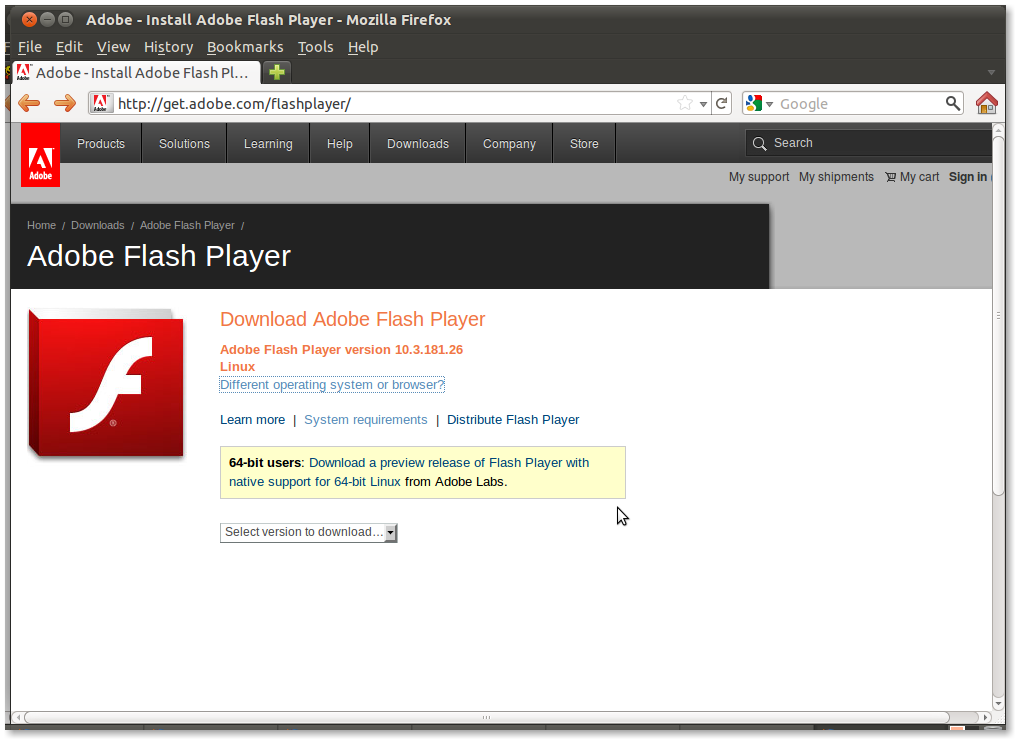
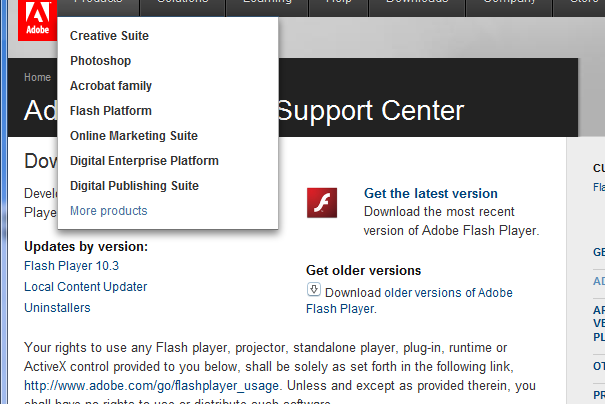
Adobe Flash Player Old Version Downloads
Adobe Flash Player Uninstaller 2. Download. Instructions: Download the uninstaller for Flash Player The Flash Player uninstaller executes on both 6. Windows operating systems. Save the file in a location where you can find it easily after you restart your computer. For example, save it on your Windows desktop. Note: To uninstall Flash Player beta, use the corresponding Flash Player beta uninstaller available in Adobe Labs.
Exit all browsers and other programs that use Flash. The uninstaller does not work if any programs that use Flash are running on your computer. Look at the taskbar.
If the taskbar contains program icons for a browser or for a game that uses Flash, right- click each icon and choose Close. This example shows a browser in the taskbar: Look at the icons in the system tray for programs that run in the background. Examples include AOL Instant Messenger, Yahoo! Messenger, and games that use Flash (any file with a name that ends in . If you see such an icon, right- click the icon and click Exit, as shown in this example: Run the uninstaller.
Gain early access to developing Adobe technologies including preview and beta software, pre-release plug-ins, related samples, documentation, tutorials and more. Download Adobe Flash Player Uninstaller. Uninstall Adobe Flash Player properly from your computer. Adobe Flash Runtimes. Adobe AIR and Adobe Flash Player are ubiquitous runtimes of Adobe Flash that enable developers to consistently deliver expressive content.
Double- click the icon of the uninstaller that downloaded to your computer. Follow the prompts. If you see the message .
Adobe - Flash Player : Settings Manager. Global Security Settings panel. Note: The Settings Manager that you see above is not an. Settings Manager itself. Click the tabs to see different. Adobe Flash Player.
If you are a designer or developer creating applications for Flash Player. Use the Global Security Settings panel to specify if SWF or FLV content that uses. Internet. Is the SWF or FLV content trying to communicate. I trust? The website with which the SWF or FLV content wants to. SWF or FLV content. Your options are as follows: You can set Flash Player to always ask your permission. SWF or FLV content use older security rules; always.
SWF or FLV content to use older security rules; or always. SWF or FLV content the right to use older security rules. Read more about Online. Flash Player 8 and later) For a finer level of control, you can let. SWF or FLV content on your computer use older security rules to access any. Internet site it wants. This option, at the bottom of the panel, applies only.
SWF or FLV content that is stored locally on your computer, not accessed from a. Read about SWF or FLV content stored on your computer (Flash Player 8 and later). If you do not allow SWF or FLV content to use the older security rules, the. If you change your mind about. Global Security Settings panel and.
For an overview of issues relating to global security settings, see What. Online and local content that uses the older security.
Some SWF or FLV content on websites or on your local computer uses older security. Internet. You want to add a pair. A. com. In this example, the first site tries to access the. Or, SWF or FLV content stored locally on your. Internet. When the content uses older. Flash Player asks your. You can set the permission so that it affects all SWF or FLV content.
If you want Flash Player to always ask your permission. Always Ask My Permission. At that point, you. SWF or FLV content to use the older security rules or deny it the.
If you want to always allow SWF or FLV content use the older. Always Allow Access. Selecting this option means you. Flash Player that you trust all SWF or FLV content and don't want to be.
You will not see the security pop- up question again. Selecting this option means you do not trust any. SWF or FLV content that uses the older system of security. You won't see the. Because SWF or FLV content will not be.
SWF or FLV content might not function as intended. SWF or FLV content stored on your computer (Flash Player 8 and. Some SWF or FLV content that you download to your computer might try to use older.
Internet. For example, you might enter. Flash Player that you use offline, then that. In another example, a. Flash Player installed on your computer may contact the Internet for. You can specify what SWF or FLV content on your computer may always use the older.
Security panel. Flash Player won't ask you for permission and will. Always Deny is. selected in the Security panel. Install Adobe Flash Player Kubuntu System. The Always Trust Files in These Locations list.
Settings panel. That is, if you select to always. The Always trust files list at the bottom of the panel applies specifically. SWF or FLV content that you have downloaded to your computer, not content that you. The Add Location box opens. If. you arrived at the Settings Manager by clicking the Settings button in a. Add Location box contains a path that looks something like. C: \directoryname\filename.
Users/directoryname/filename. Internet and was stopped by Flash Player. If the path contains the content that you want to let communicate. Internet, copy and paste the path into the Trust this location box.
You. can add an individual file or an entire directory. If you add an entire. In. general, avoid trusting top- level directories.
Click Confirm. The location is added to the Security Settings. Locations listed are always allowed to use the older security rules. Always Deny or Always Ask options at the top of the Security panel. After you add trusted locations, you must restart the. SWF or FLV content by either refreshing the browser or restarting the player.